Gamma, the AI tool best known for helping people build presentations and simple web pages, has launched a new image-generation product called Gamma Imagine. On paper, that sounds like one more AI launch in an already crowded week. In practice, it is a useful sign of where everyday business software is heading: fewer separate design tools, more all-in-one apps that promise to help non-designers make decent-looking work faster.
For many UK readers, especially freelancers, side-hustlers and small business owners, that is the real story here. Not whether Gamma can out-muscle Canva or Adobe overnight, but whether ordinary people might soon be able to create social posts, charts, marketing materials and pitch visuals without bouncing between five different apps.
What has changed
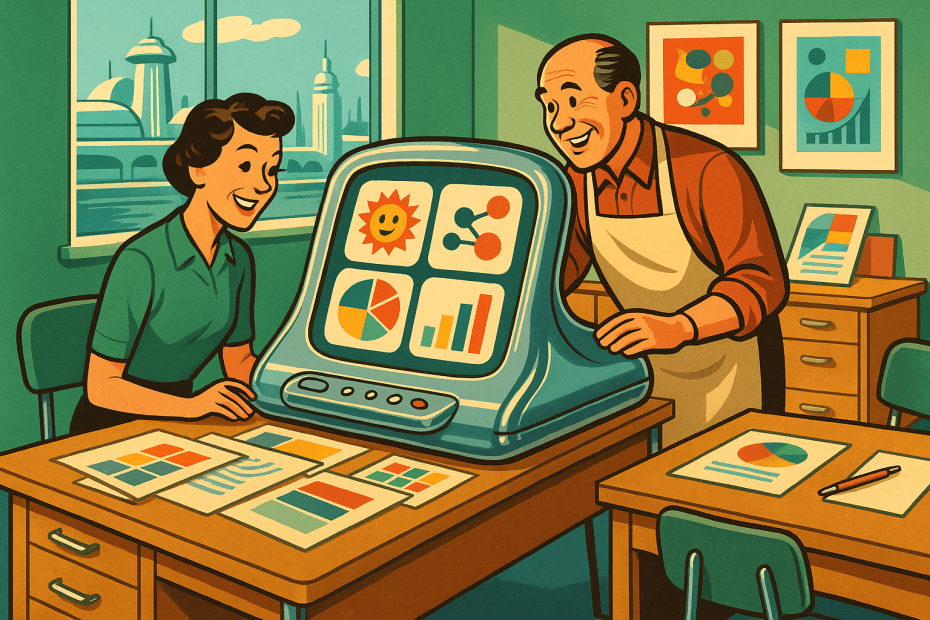
According to TechCrunch, Gamma’s new tool is aimed at creating brand-specific visual assets from text prompts. The company says people will be able to make things like social graphics, marketing collateral, infographics, charts and other presentation-friendly visuals from within the Gamma workflow rather than exporting work elsewhere.
It is also pitching the product as part of a wider connected setup. TechCrunch reports that Gamma is integrating with services including ChatGPT, Claude, Zapier, Make, Atlassian, n8n and Superhuman. That matters because it suggests Gamma is not just trying to be a prettier slide deck app. It wants to sit in the middle of everyday knowledge work, where people are already drafting ideas with AI, pulling in notes from other tools and turning rough information into something presentable.
Why this matters for ordinary people
Most people do not wake up wanting an “AI image-generation platform”. They want a cleaner sales deck, a more convincing leaflet, a better-looking social post, or a quick chart that does not feel embarrassing to send to a client. That is why tools like this can matter more than headline-grabbing AI demos. They are trying to remove small bits of friction from work that millions of people already do.
If you run a small business, work in a charity, manage a local club, or just end up being the person who makes the posters and PowerPoints, the appeal is obvious. You may not have a designer on hand. You may not have time to learn Adobe properly. You may already be using Canva, PowerPoint and ChatGPT in a slightly messy chain. Gamma is betting that people would rather do more of that in one place.
That fits a wider pattern across consumer AI. The winning products are often not the ones that sound most futuristic. They are the ones that make a boring Tuesday task a bit quicker. We saw a similar lesson in our recent look at ChatGPT’s new app connections: the promise is convenience, but the real question is whether it saves time in normal life rather than just looking clever in a demo.
Where it could genuinely help
There are a few realistic use cases here. A shop owner could use a prompt to create matching promotional graphics for a spring sale. A self-employed consultant could turn rough notes into a tidier client presentation. A parent running a school fundraiser might generate a simple event graphic and an easy-to-read comparison chart for costs. A micro-business could test a few visual styles before paying a professional for a final campaign.
Used well, this sort of tool can be especially helpful for people who know what they want to say but struggle with the visual side. That does not make designers obsolete. It simply lowers the floor for everyday communication. In the same way spellcheck did not remove the need for good writers, AI design helpers may become a basic support tool rather than a full replacement for skilled creative work.
The sensible watch-outs
Still, this is where it is worth slowing down. AI-generated visuals can look polished while being oddly generic. They can also invent details, misunderstand a prompt or produce images that are technically fine but emotionally off. If you are making something customer-facing, you still need a human eye on it.
There is also the question of brand trust. If every small business starts using the same handful of AI-generated styles, the web could get blander rather than better. And if you are uploading business information, campaign plans or customer details into a connected AI workflow, it is sensible to check privacy settings, permissions and what gets stored. That is one reason clear AI safety labels and limits matter more than they first appear.
Cost is another practical point. AI tools often start by sounding cheap and simple, then add premium tiers, usage caps or paid extras once people rely on them. So if you are tempted, it is worth treating this as a useful assistant rather than the new centre of your business until the pricing and reliability are clearer.
Should UK readers care yet?
Yes, but in a calm way. This is not a must-drop-everything launch. It is more like an early glimpse of the next phase of office software, where writing, designing and presenting slowly merge together. If you already make a lot of visual work and hate switching tools, products like Gamma Imagine could become genuinely handy. If you rarely do that kind of work, you can probably wait and see.
The more useful takeaway is broader: AI is increasingly being folded into ordinary software, not sold as a separate magic trick. For UK workers and small firms, that means the important skill is no longer just “can I use AI?” but “when is this actually good enough to trust?” Gamma’s new tool looks like another step in that direction.
Sources: TechCrunch reporting on Gamma Imagine and Gamma’s product integrations, accessed 17 March 2026.