A free home clean sounds like an easy yes. Floors mopped, kitchen wiped down, no bill at the end. But a new AI training offer in the US shows why the real question may soon be: what are you paying with instead?
The Verge reports that AI startup Shift is offering free apartment cleaning in New York while recording cleaners at work. The footage is intended to help train future robots to understand household chores from a cleaner’s point of view. The company says the service is initially limited, but has suggested it could expand to cities including London.
That makes the story worth watching in the UK even before the service is available here. It is a neat example of a trade-off that is likely to become more common: ordinary people receiving a useful service, discount or payment in exchange for data from real homes, bodies, voices, routines or workplaces.
For households, the practical issue is not whether home robots sound exciting. Many people would happily let a machine handle the hoovering. The issue is whether the training data needed to build those machines is collected in a way that people fully understand.
What Shift is offering
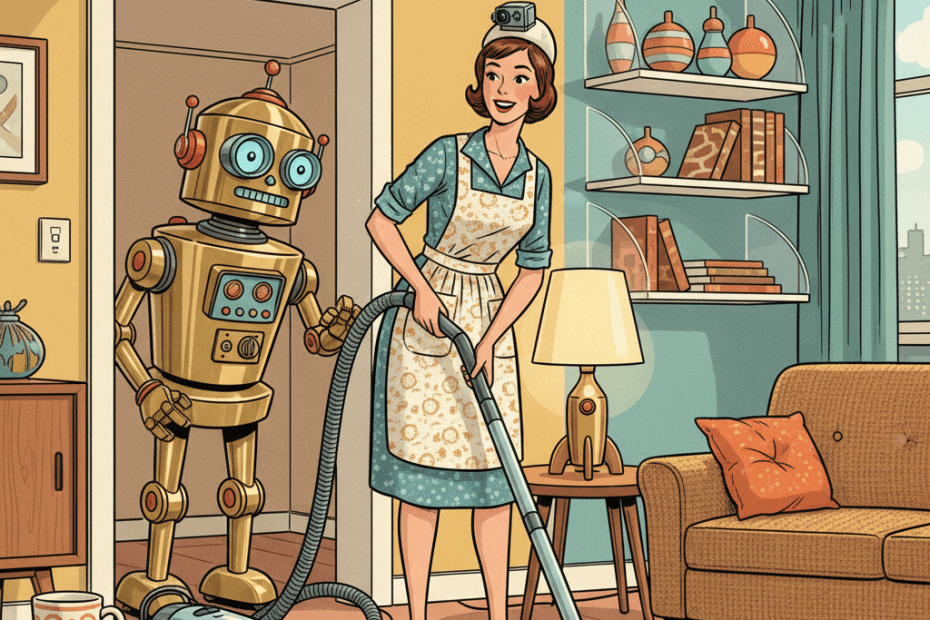
According to The Verge, Shift’s offer is simple on the surface. A cleaner comes to your home and performs ordinary cleaning tasks. A camera worn by the cleaner records what they are doing, creating footage that can be used to train AI systems and robots.
The company says sensitive details such as names, faces and personal information from screens or ID cards are blurred and anonymised before the footage is used for AI training. It also says cleaners are vetted through partners, though they are not Shift employees.
Shift describes the data as valuable enough to pay for the cleaning. That is the important part. The cleaning may be free in cash terms, but the footage from inside the home is the thing being exchanged.
The company also says difficult cleaning environments can be especially useful, because messy, varied real homes teach machines more than pristine test rooms. That may be true technically, but it also means the most useful data could be the most revealing: cluttered counters, lived-in bedrooms, family noticeboards, work-from-home desks, medication boxes, children’s toys, paperwork, device screens and daily habits.
Why home data feels different
People already share huge amounts of data with apps, shopping sites, smart speakers and social networks. But the home is a different setting. A phone app may know what you searched for; a camera in the home can capture how you live.
That matters because household footage is rich. It can show room layouts, possessions, routines, security habits, disabilities, family arrangements and private mess. Even if names and faces are blurred, the scene itself may still be personal.
This is why “anonymised” should not be treated as a magic word. Blurring can reduce risk, but it does not automatically answer every question. Who checks the footage before it is blurred? What counts as sensitive? Can audio be captured? How long is raw footage kept? Is it shared with partners? Can it be used to train future products that are very different from the one being advertised today?
ManyHands has covered this wider pattern before, including why people should read the small print when they are paid to sell voices and everyday activity to train AI. The lesson is similar here: the payment, discount or free service is only one side of the deal.
The questions UK households should ask
What exactly is recorded? Ask whether the system records video only, audio as well, location information, timestamps, room maps or notes from the cleaner. A short promotional description is not enough.
Who sees the raw footage? There is a big difference between automated processing, a small internal review team, contractors, partner companies and future customers. If humans can review clips, the policy should say so clearly.
What is blurred, and when? Blurring after upload is not the same as blurring on the device before footage leaves the home. If personal details are removed later, someone or something still had access to the original recording first.
How long is the data kept? Training data can be valuable for years. Households should know whether raw and processed footage can be deleted, whether consent can be withdrawn, and what happens if the company is sold.
What rooms are off limits? Bedrooms, bathrooms, children’s rooms, home offices and medical equipment can all raise extra privacy concerns. The ability to exclude rooms or stop recording should be practical, not just theoretical.
What happens to other people in the home? Visitors, flatmates, children, carers and tradespeople may not have agreed to take part. Consent is harder when a recording service enters a shared space.
Why this could still be useful
None of this means household robotics is a bad idea. Cleaning is time-consuming, physically demanding and often unevenly shared. Better robots could eventually help older people, disabled people, busy families and anyone who simply wants fewer chores at the end of the day.
Real-world training may also be necessary. Homes are messy, unpredictable places. A robot that only learns in a laboratory may struggle with dangling charging cables, oddly shaped furniture, different flooring, narrow kitchens or the way real people leave things around.
The point is that useful AI still needs good boundaries. A fair offer should make the trade-off plain, give households meaningful control, protect cleaners as well as customers, and avoid nudging people into sharing more than they realised.
That is especially important while the market is still young. Once “free in exchange for data” becomes normal, people may stop asking what the data is worth and who benefits most from it.
The practical takeaway
If a service offers to come into your home for free because the data is valuable, treat that as a data contract, not a bargain chore. Read what is recorded, who can see it, how it is anonymised, whether you can delete it, and what happens if other people are present.
For now, this particular offer is not a mainstream UK household product. But the idea behind it is likely to travel: AI companies need real-world examples, and homes are full of them.
The safest attitude is not panic. It is curiosity with a checklist. A future cleaning robot might be genuinely useful. Before helping train it, make sure the price of the free clean is clear.
Source: The Verge.