The headline you see in search results often decides whether you click at all. That is why a small Google experiment reported this week matters more than it may sound.
According to The Verge, Google is testing AI-generated replacement headlines for some search results. Google called it a “small” and “narrow” experiment, but the principle is important. If Google rewrites a publisher’s headline with machine-generated text, the words people use to judge a story may no longer be the words the publisher chose.
For ordinary UK readers, that means the headline in Google could become a rough interpretation rather than a faithful summary.
What is happening
Google has adjusted title links in search for years. That part is not new. Its own documentation says the company may pull title text from different signals if a page title is missing, repetitive, outdated or simply not very helpful. In a 2021 Search Central blog post, Google said it used HTML title elements most of the time, but would sometimes look beyond them to make results clearer.
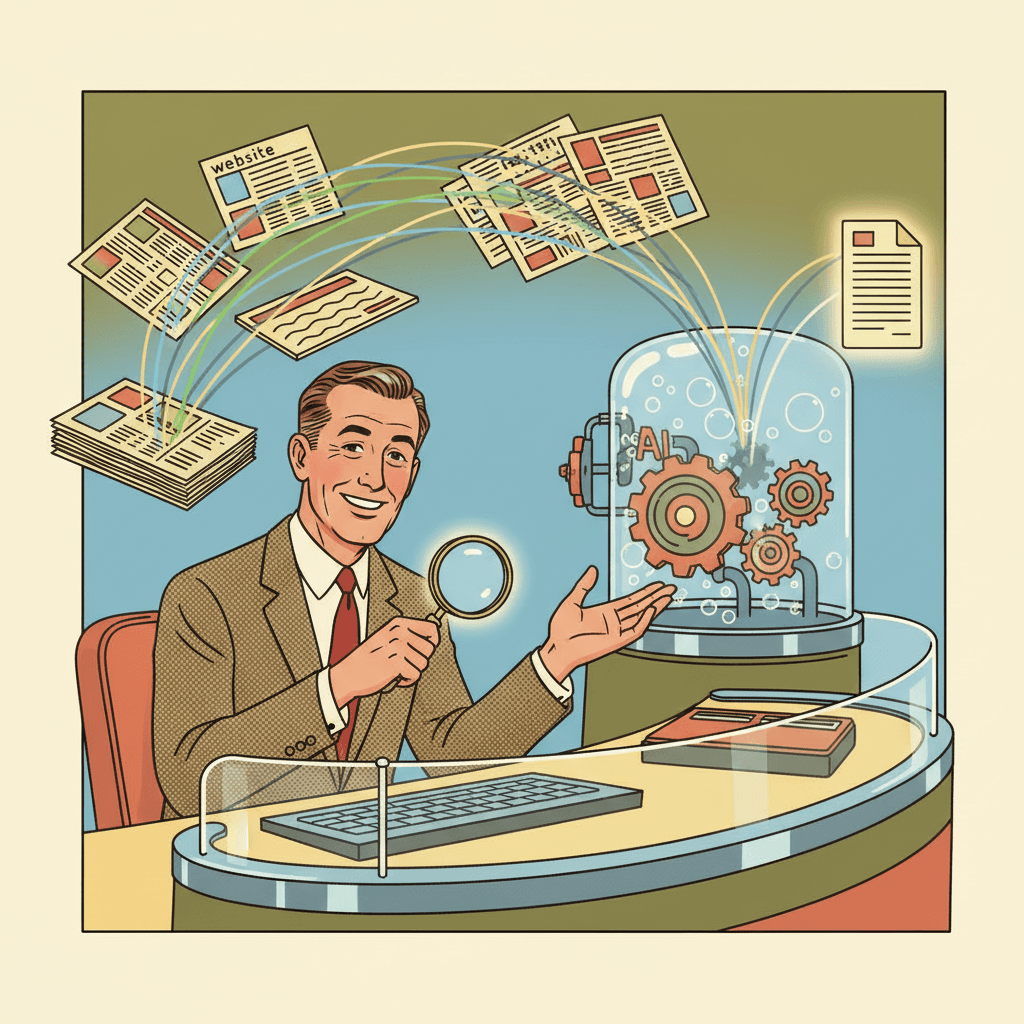
The new wrinkle is that Google confirmed to The Verge that the current experiment uses generative AI. In other words, this is not just trimming a long headline or swapping in a cleaner on-page heading. It is a test where AI helps create alternative wording for what appears in the result.
Google also told The Verge that if it ever launched something based on the experiment, it would not necessarily keep using a generative model in the final system. Even so, the test shows where Google’s thinking is going: search results themselves are becoming another place where AI may rewrite what users see.
Why this matters to readers, not just publishers
It would be easy to dismiss this as an argument between Google and news websites. It is not. Readers are affected first, because the headline is often the main clue people use to decide whether a result looks trustworthy, relevant or sensational.
If an AI-generated headline softens a warning, exaggerates a claim or strips out useful nuance, a reader can get the wrong impression before the page has even loaded. Many people skim search results quickly on a phone while commuting, shopping or solving a problem. In those moments, the headline is doing a lot of work.
This is one reason clear labelling and faithful summaries matter so much across AI products. In our earlier piece on ChatGPT’s safety labels, we argued that better signals help ordinary users understand what they are looking at. Search results need the same kind of clarity. If the visible title is being substantially rewritten, users should not be left guessing where those words came from.
The practical risk is not science fiction
This is not about killer robots or a complete collapse of the web. The more immediate risk is something duller and more common: distortion.
The Verge shared examples where replacement headlines changed tone or emphasis in ways the publication did not intend. That may sound like a small editorial annoyance, but tone is part of meaning. A cautious or critical article can look approving. A specific claim can be made to sound broader than it is. A playful headline can become a confusing one. None of that helps readers make better choices.
There is also a trust problem. Google Search has long been treated as a shortcut to “the page you actually meant”. If search starts presenting AI-polished wording instead of the original headline, that old sense of directness gets weaker. People may still reach the right page, but the framing on the way there becomes less reliable.
What Google is likely trying to do
To be fair, Google is not doing this for no reason. Its guidance on title links makes clear that it wants search results to be concise, descriptive and useful. Sometimes publishers do write messy titles, and rewriting can make results easier to scan.
That logic makes sense up to a point. But as we have argued before, AI works best as a helper rather than a substitute. Tidying obviously broken title links is one thing. Freely rewriting the wording people see is another. Once AI starts substituting its own interpretation for a publisher’s headline, the issue is not just usability but accuracy and accountability.
What ordinary users should do now
There is no need to panic, and this is not a reason to stop using Google Search. But it is a useful reminder to read with slightly more care.
If a headline in search looks oddly vague, oddly dramatic or just a bit off, click through before assuming you know what the story says. Check the actual headline on the page. See whether the tone matches. If something sounds too neat or too provocative, slow down for a moment. That habit is increasingly sensible across AI-influenced products, not just search.
For now, Google says this is a limited experiment. Fine. But limited experiments have a habit of becoming normal features if companies think users will tolerate them. That is why it is worth paying attention early. Small changes in how information is presented can have a large effect on how people understand it.
Search is still most useful when it helps you find other people’s work, not when it quietly rewrites that work on the way past. If AI is going to sit between readers and the open web, it should do so very carefully.
Sources:
The Verge — Google Search is now using AI to replace headlines
Google Search Central Blog — More information on how Google generates titles for web page results
Google Search documentation — Influencing title links in Google Search