Most people in the UK do not wake up thinking about robotaxis. But they may start hearing about them a lot more often. This week, Uber, Nissan and the British self-driving company Wayve announced plans for a robotaxi pilot in Tokyo in late 2026. On the surface, that sounds like a faraway tech story. In reality, it is a useful sign of where transport apps may be heading next — and of how British AI firms are trying to turn research into everyday services.
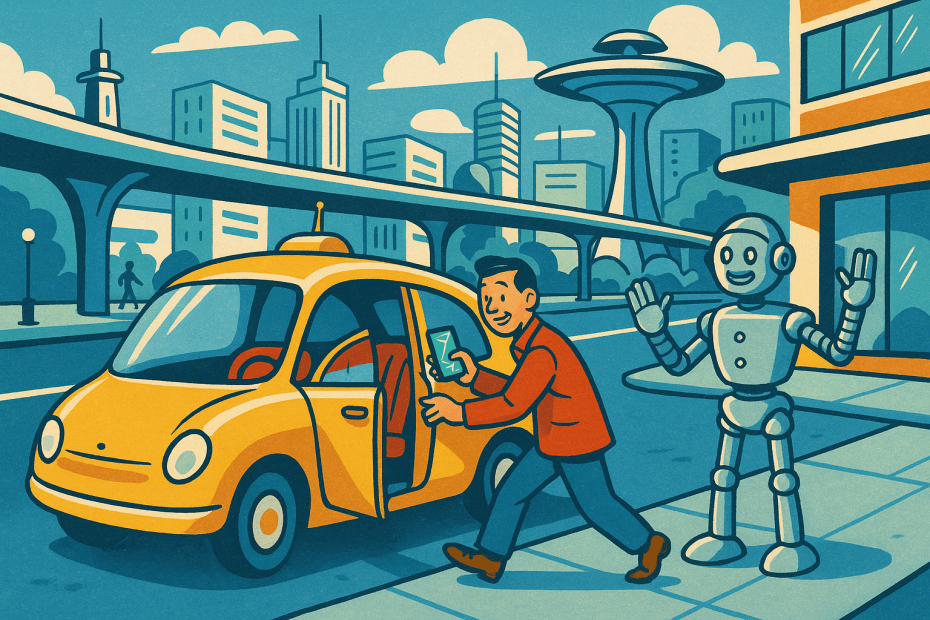
The short version is simple. Uber wants people in Tokyo to be able to book Nissan Leaf electric cars fitted with Wayve’s autonomous driving system through the Uber app. At first, there will still be a trained safety operator in the vehicle. That matters, because this is not a case of companies throwing fully driverless cars into a busy city and hoping for the best. It is a staged pilot in one of the world’s most complicated urban driving environments.
What has actually been announced
According to Nissan and Uber, the Tokyo pilot is planned for late 2026 and is still subject to regulatory discussions. The cars will use Wayve’s “AI Driver” software, which the company says is designed to learn from real-world driving data and adapt to new roads and cities without depending on a painstakingly built high-definition map for every street.
That is one reason the announcement matters. A lot of self-driving projects have depended on carefully pre-mapped areas and fairly limited operating zones. Wayve’s pitch is different: teach the system to handle the messiness of real roads more flexibly. The company has also been testing in Japan since early 2025.
It is also part of a bigger rollout. Uber and Wayve have already talked about a planned London robotaxi pilot, and Nissan says the three companies want to expand across more than ten cities worldwide. So while Tokyo is the headline, the UK is part of the background story.
Why UK readers should care
First, because this is one of the clearest examples yet of a UK AI company moving into a public-facing service that ordinary people could actually use. A lot of AI news is about chatbots, office software or giant data centres. This is different. It is about whether AI can quietly handle a practical task in the real world: getting someone from A to B safely.
Second, because transport tends to be where futuristic ideas either become normal or fall apart. If autonomous ride-hailing works in places like Tokyo and, eventually, London, it could change how people think about taxis, late-night travel, airport runs and even car ownership. That does not mean everyone will be hopping into driverless cars next year. But it does mean the idea is moving out of the lab and into normal consumer apps.
Uber is also framing this partly around driver shortages. That will ring true in plenty of places, including here. In parts of the UK, especially outside big city centres, getting a taxi quickly can be frustrating or expensive. If robotaxis ever become reliable and affordable, they could help fill gaps rather than replace every ordinary journey.
What this could mean in real life
For now, the practical effect for most UK readers is not that you should expect to use a robotaxi tomorrow. It is that the transport app on your phone may gradually become more mixed. One day it might offer a standard ride, an electric car, a shared trip or an autonomous vehicle, depending on where you are and what is available.
That could bring a few genuine benefits if it is done well. A robotaxi service could, in theory, run for longer hours, make more use of electric vehicles and give people another option when human drivers are scarce. For older people, those with limited mobility or anyone who finds driving stressful, an easy-to-book autonomous ride could eventually be useful.
There may also be knock-on effects beyond taxis. If Wayve’s software proves itself in ride-hailing fleets, similar systems could influence future driver-assistance features in ordinary cars.
The sensible watch-outs
It is still early, and this is where a bit of calm is helpful. A pilot is not the same thing as a mature service. Safety operators will be in the car at first, regulations still need to be satisfied and the companies involved all have an incentive to sound more confident than the average passenger may feel.
There are also public questions that will need good answers. How safe is the system in bad weather, roadworks or unusual situations? What happens if a passenger needs help quickly? And how much data about trips, cameras and in-car behaviour will be collected and kept?
Trust will matter as much as the technology. People are usually happy to try a clever new app feature; they are much more cautious about handing over control of a moving vehicle. That is reasonable. The companies involved will need to earn confidence slowly, not just announce it loudly.
The bigger picture
The most interesting part of this story is not Tokyo. It is that AI is creeping into ordinary services in a less flashy, more physical way. Instead of writing an email or summarising a document, it is being asked to deal with traffic, pedestrians, cyclists and the general unpredictability of city life. That is a much harder test.
For ManyHands readers, the takeaway is not “robotaxis are here, panic or celebrate”. It is simpler than that. A British AI company is now part of an attempt to put autonomous rides into a mainstream app, in partnership with established firms.
So this is worth watching — not because it is sci-fi, but because it may slowly become mundane. And when AI starts becoming mundane, that is usually when it begins to affect everyday life.