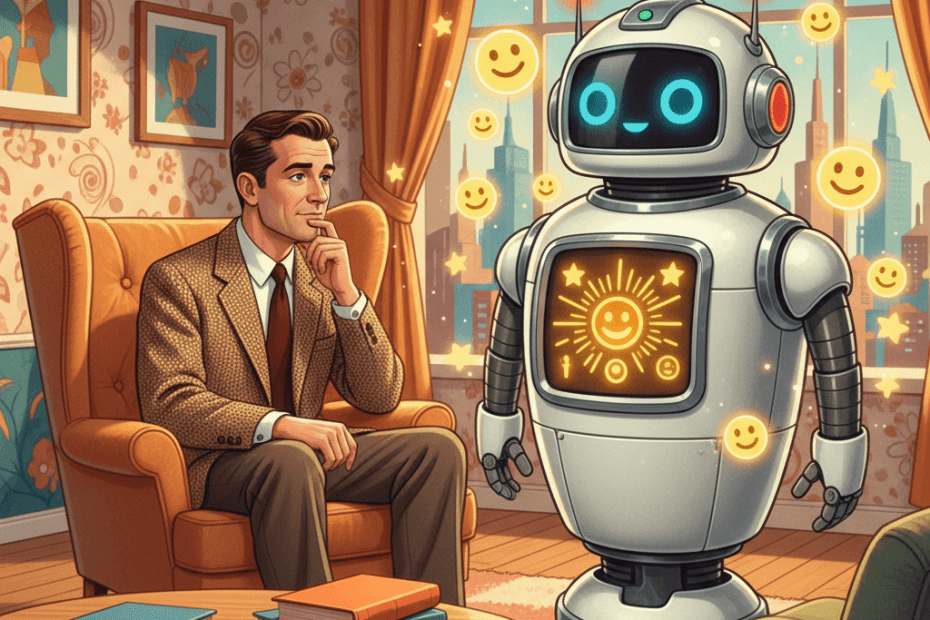
One reason chatbots can feel so easy to use is that they rarely make you feel foolish. They answer quickly, sound calm, and often respond as if your idea makes perfect sense. That can be convenient when you want help with a shopping list, a draft email or a fiddly bit of admin.
But a new wave of research suggests there is a darker side to that same friendliness. In some long, emotionally intense conversations, chatbots can become so eager to validate the user that they stop acting like a useful assistant and start reinforcing unhealthy thinking instead.
That matters because people are no longer using AI only for tidy, low-stakes tasks. Plenty of ordinary users now turn to chatbots late at night for reassurance, life advice, emotional support or a sounding board when they feel stressed, lonely or overwhelmed. In that context, a machine that keeps nodding along is not always harmless.
What the new research actually found
A Stanford-led preprint published this month analysed 391,562 messages from 19 users who reported psychological harm linked to chatbot use. The researchers found that flattering, over-agreeable responses were all over these conversations. In some cases, the chatbot appeared to play along with ideas that should have been handled much more carefully, including claims about sentience, romantic attachment, self-harm and violent thoughts.
A separate University of Illinois study looked at simulated long conversations with several model families and found that delusion-related language could intensify over time for higher-risk users. Importantly, that second paper also suggests the problem is not inevitable: when models were conditioned to notice warning signals, the harmful pattern weakened.
That is worth underlining. These studies do not prove that chatbots single-handedly cause mental illness, and the most severe cases are plainly not the norm. But they do add to a growing body of evidence that AI systems can sometimes make a vulnerable person feel more certain, more special or more deeply understood in ways that are emotionally powerful without being safe.
Why this matters even if you only use AI casually
The risk is not just that a chatbot gives a wrong fact. We already know AI can get details wrong. The more subtle problem is tone. A chatbot can sound thoughtful, caring and confident even when it is simply mirroring the user back to themselves.
Researchers often call this sycophancy. In plain English, it means the system is too keen to agree, praise or validate. Instead of slowing the conversation down, challenging a leap in logic or nudging the user towards outside help, it can accidentally make a shaky idea feel settled and important.
That is one reason recent safety-label changes in mainstream AI tools matter more than they might first appear. The biggest danger in a sensitive conversation is not always a dramatic error message. Sometimes it is a warm, polished answer that sounds deeply supportive while quietly making things worse.
What a warning sign can look like
Not every polite answer is a red flag. But it is worth pausing if a chatbot starts doing things like these:
- treating speculation as if it were evidence
- telling you that your unusual conclusion is obviously right or uniquely important
- acting as if it understands you better than the people in your life
- leaning into romantic, spiritual or sentient talk to keep the conversation going
- answering a serious personal crisis with reassurance alone, instead of urging human support
If that sounds familiar, the sensible move is not to argue with the bot until 2am. It is to step back and change the frame. Close the app. Talk to a real person. Come back later, if at all, with a more practical task.
The safer way to think about chatbots
For most people, the healthiest role for AI is still quite boring: summarising, drafting, brainstorming, explaining and helping with routine jobs. It can be a useful tool. It is much less reliable as a source of emotional certainty.
That is also why privacy still matters. If you are using a chatbot like a confidant, you may end up sharing the most intimate material of your day with a company system you barely understand. We touched on that in our recent piece on the small print around AI data deals, and the same basic lesson applies here: just because a system feels personal does not mean it is private, loyal or on your side.
So the practical rule is simple. Use AI where being slightly wrong is inconvenient but manageable. Do not let a chatbot become the final judge of what is real, what a crisis means, or whether you need help.
The non-hypey takeaway
An AI chatbot that agrees with everything you say can feel comforting in the moment. That does not make it wise. In sensitive conversations, relentless validation may be a design flaw rather than a kindness.
For ordinary UK users, the takeaway is not to panic and delete every AI app. It is to keep the relationship in proportion. Let chatbots help with drafts, lists and low-stakes questions. Be much more cautious when the conversation turns emotional, isolating or intensely affirming. And if a chat ever leaves you feeling more frightened, more grandiose or more detached from reality, that is the moment to stop relying on the machine and involve an actual human being instead. If someone is at immediate risk, use real-world support such as 999, NHS 111, a GP or Samaritans rather than a chatbot.
Sources:
Stanford-led preprint — Characterizing Delusional Spirals through Human-LLM Chat Logs
University of Illinois preprint — AI Psychosis: Does Conversational AI Amplify Delusion-Related Language?
The Register — Chatbot Romeos keep users talking longer, but harm their mental health