A mass robotaxi outage in Wuhan has done something glossy demos rarely manage: it has made the awkward bit of automation impossible to ignore. According to the BBC, at least a hundred self-driving cars operated by Baidu’s Apollo Go service stopped in traffic after what police described as a system malfunction. No injuries were reported, but the images were a useful reminder that when software runs transport, a failure does not just affect one user on one screen. It can spill straight into real roads, real journeys and real people.
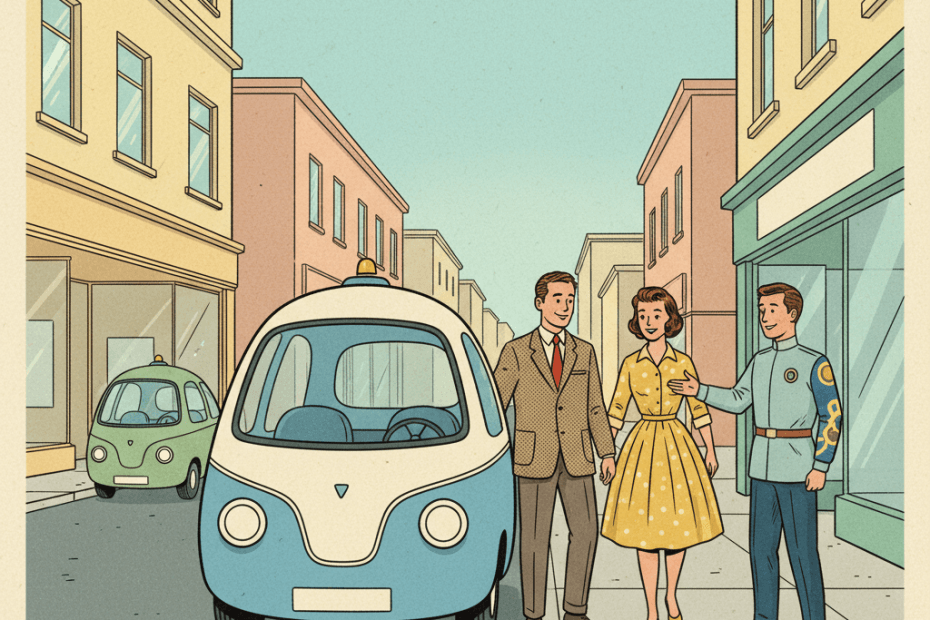
That matters in the UK because driverless transport is no longer some distant Silicon Valley promise. We have already seen AI creeping into ordinary journeys in smaller ways, including chatbots turning up in car dashboards. Now the government is also preparing for self-driving passenger services, with commercial pilot schemes for taxi- and bus-like services due to start in England from spring 2026.
What actually happened
The Wuhan outage appears to have been a fleet-level problem rather than one isolated car having a bad day. Police said multiple vehicles stopped in the middle of the road after a system malfunction, while videos shared online appeared to show stranded cars blocking traffic and at least one collision. Baidu had not immediately commented when the BBC report was published, and the cause was still under investigation.
That uncertainty is part of the story. With ordinary car trouble, people broadly understand the categories: flat battery, puncture, engine issue, driver error. With automated fleets, the failure modes are less familiar. One bug, bad update, network issue or edge-case problem can affect multiple vehicles at once. Even if driverless systems turn out to be safer on average, they can still go wrong in ways that feel strange and unsettling when they do.
Why UK passengers should care now
The Department for Transport has already said commercial pilots of self-driving taxi- and bus-like services are being fast-tracked to spring 2026 in England, with the public potentially able to book some services through an app. The Automated Vehicles Act, which became law in 2024, is meant to create the legal framework for that rollout and says self-driving vehicles must reach a safety standard at least as high as a careful and competent human driver.
That sounds sensible, but “safe on average” is not the same as “nothing weird will ever happen”. The Wuhan stoppage is a timely reminder that public trust will depend on how these systems fail, not just how they behave on a good day. If a driverless taxi freezes in the wrong place, can passengers get help quickly? Can the vehicle move safely or be recovered fast? Is there a human team watching over the service, or just a vague promise in the app?
There is a broader lesson here too. We have already seen that AI tools can behave unpredictably once they are given more room to act. Putting that kind of technology into transport raises the stakes. A clumsy answer in a chatbot is annoying. A stalled car in moving traffic is something else entirely.
What to check before using a driverless taxi
First, find out who is actually responsible. One useful part of the UK’s legal framework is that when a vehicle is genuinely in self-driving mode, the human occupant is not meant to carry the legal blame for how it drives. Responsibility shifts towards the companies behind the system. That is good, but passengers should still know which company runs the service, who handles complaints, and what happens if a trip goes wrong.
Second, check the support plan before you need it. If the car stops, is there an obvious way to contact a human? Is support available at once, or only through a slow in-app form? In the early years of any driverless service, fast human backup may matter just as much as the software itself.
Third, look for the operating limits. Many automated systems work only in particular areas, conditions or road types. A service that works neatly on mapped urban routes in good conditions may not behave the same way at night, in heavy rain, around roadworks or in chaotic city-centre traffic. Sensible operators should be clear about those limits rather than pretending the vehicle can handle everything.
Fourth, pay attention to basic passenger safety. If something unusual happens, can you leave the vehicle safely? Are there clear instructions for emergencies? If there is no safety driver, does the company explain how passengers are monitored and assisted during breakdowns or incidents?
Fifth, do not mistake novelty for maturity. A slick booking app and a smooth first ride do not tell you how a system performs when conditions become messy. The useful question is not “Did it work once?” but “What happens when it does not?”
The calm, practical view
The sensible response to the Wuhan outage is not to declare driverless transport doomed. Human drivers make mistakes every day, and one high-profile robotaxi failure does not automatically prove the whole idea is unsound. But it does show why public scrutiny matters before these services become normal.
For UK passengers, the best habit is simple: treat driverless taxis like any other important service entering public life. Ignore the theatre. Look for the boring details. Who is accountable? How quickly can a human intervene? What are the limits? And what evidence is there that the operator has planned for the awkward moments, not just the polished demonstration rides?
If driverless taxis do begin appearing on UK roads over the next year or two, those are the questions that will matter most. Convenience is nice. Safety, clarity and a proper backup plan are what will decide whether people actually trust the ride.
Sources:
BBC News — Mass robotaxi malfunction halts traffic in Chinese city
GOV.UK — Driving innovation: pilots of self-driving vehicles fast-tracked
GOV.UK — Self-driving vehicles set to be on roads by 2026 as Automated Vehicles Act becomes law