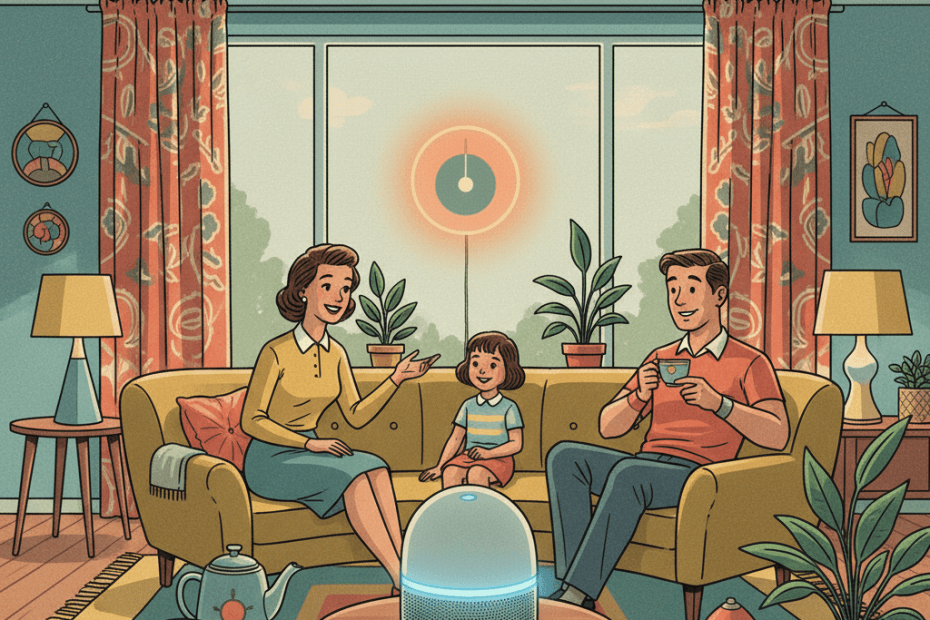
Smart-home voice controls have always sold a simple dream: just say what you want, and the house listens. In practice, plenty of people have found themselves learning the machine’s preferred wording instead. A light has to be named just so. A room command works one day and misfires the next. Asking for something slightly more natural can leave you feeling as if you are talking to a sulky call-centre script rather than a helpful assistant.
Google says its latest Google Home update is meant to smooth out some of that friction. According to the company’s release notes, Gemini for Home is getting better at understanding natural language around lights, appliances and climate controls, with changes rolling out from late March. That means people should be able to ask for things in a looser, more human way, including lighting requests such as “the colour of the ocean”, more precise appliance commands such as preheating a smart oven to a set temperature, and tidier control over heating and thermostat modes.
That sounds promising, especially if you already have Google speakers, displays or a connected thermostat at home. But as with a lot of consumer AI, the useful question is not “Can it do more?” so much as “Will it make everyday life easier without creating fresh confusion?” We have already seen with more human-sounding voice AI that a smoother conversation is not automatically the same as a more reliable one.
What has actually changed
The clearest update is around how Gemini for Home interprets ordinary smart-home requests. Google says you no longer need exact colour names for smart lighting, so you can ask for a mood or image rather than a strict preset. It also says Gemini is better at distinguishing between device types, including things like a lamp versus a light, and better at recognising devices with unusual names.
That matters more than it sounds. One of the least glamorous problems with smart homes is device housekeeping. A home can quickly fill up with oddly labelled bulbs, plugs and speakers, especially if more than one person has set them up over time. If the assistant can correctly understand what you mean without you having to remember the exact label, the system stops feeling like admin and starts feeling a bit more useful.
Google’s March release notes also mention broader improvements that help explain the push. Common commands such as turning lights on are supposed to be faster, and the assistant is meant to be less likely to cut people off mid-sentence. Google also says supervised children’s accounts can now use Gemini for Home, which widens the potential household use but also raises the importance of clear parental settings and sensible expectations.
Why this could help ordinary households
For many people, the best smart-home moments are tiny ones. Dimming lights when your hands are full. Turning the heating down from bed. Starting the oven while you finish work upstairs. If Google’s update works well, it could remove some of the awkward “computer says no” moments that have put people off voice control in the first place.
It may also help people who share a home. Voice assistants often work best for the person who set everything up, because that person knows the room names, device groups and little quirks. More natural requests could make the system less brittle for everyone else. That is especially useful in family homes, rented flats or households where one person is the reluctant default tech support.
There is a bigger picture here too. Smart-home AI becomes easier to live with when it fades into the background. Most people do not want to “experience an AI system”. They want the lamp to change, the room to warm up or the timer to start, without a faff. The more ordinary the request can sound, the closer these tools get to being genuinely convenient.
What UK users should still check
First, check whether the feature is actually available in your setup. Google’s Home and Gemini rollouts can vary by country, device and subscription level. Some Gemini for Home features are in early access, and some sit behind Google Home Premium. The UK is included in Google’s supported-country list for Gemini for Home early access, but that does not mean every feature lands for every user at once.
Second, keep your expectations realistic. “More natural” does not mean flawless. A voice assistant can still mishear you, target the wrong device or behave oddly when several family members have similar routines. If you are giving it more control over heating, appliances or automations, start with low-stakes tasks and see how it behaves over a few days.
Third, remember that convenience and oversight need to travel together. The more connected devices you hand over to one assistant, the more important it is to know what can be controlled, who can trigger it and how you switch things back manually. That is the same lesson we have seen with AI tools that become harder to supervise once they get more access.
Fourth, think about the household, not just the gadget. If children can use Gemini for Home, or if guests and relatives may speak to it, check what information it can access and what actions it can trigger. A smart home is not just a pile of devices. It is part of family life, which means accidental commands and messy real-world use are guaranteed.
The practical view
This update does not suddenly turn Google Home into a flawless digital butler, and it does not solve the deeper trust questions around always-listening devices, subscriptions or connected appliances. But it does point in the right direction. The best home AI improvements are usually the boring ones: fewer misfires, less awkward phrasing, faster response, clearer boundaries.
For UK households already using Google Home, the sensible move is to try a few everyday commands that used to be slightly annoying. Ask for a softer lighting mood. Try a more natural thermostat request. See whether the assistant now understands the way you would actually speak to another person. If it does, that is real progress. If it still needs a carefully memorised script, then the technology is not quite as effortless as the marketing suggests.
Either way, this is the right standard to judge it by. Not whether the demo sounds futuristic, but whether your home feels calmer, simpler and less fiddly afterwards.
Sources:
The Verge — Google Home’s latest update makes Gemini better at understanding your commands
Google Nest Help — What’s new in Google Home
Android Authority — Your Google Home is about to get much better at listening and following orders