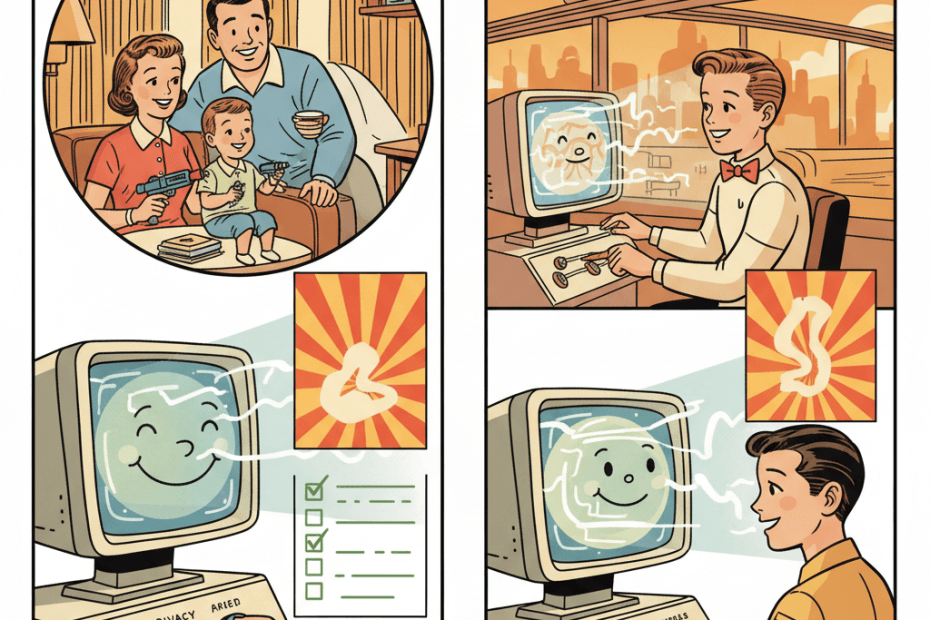
ChatGPT may soon start showing ads to some UK users. OpenAI says it plans to expand its advertising pilot to the United Kingdom in the coming weeks, after earlier testing in the United States and other English-speaking markets.
For many people, the immediate reaction will be simple: “I knew this was coming.” Free online services are often funded by advertising, and AI assistants are expensive to run. But ads inside a chatbot feel different from ads beside a search result or in a social feed, because people often use chatbots for personal, work-related or decision-making tasks.
That does not mean the change is automatically bad. It does mean UK users should understand what is being tested, what OpenAI says it will protect, and where a little extra scepticism will be useful.
What OpenAI says is changing
OpenAI says the ads pilot is being expanded to the UK, Mexico, Brazil, Japan and South Korea. The company says the test is intended to support broader access to ChatGPT while keeping the experience useful and trustworthy.
In its explanation of the pilot, OpenAI says ads are for logged-in adult users on free or lower-cost tiers, while paid workplace and education plans are not part of the same ad test. It also says sponsored content should be clearly labelled and visually separated from ChatGPT’s ordinary answer.
The key promise is that ads should not influence the answer ChatGPT gives. In other words, if you ask for help comparing ideas, planning a meal, drafting a CV or researching a purchase, OpenAI says the actual answer should still be based on usefulness rather than on who paid to appear nearby.
That distinction matters. A sponsored suggestion beside an answer is one thing. An answer quietly shaped by advertising would be much harder for ordinary users to judge.
Why ads in a chatbot need different habits
People use AI assistants in a more conversational way than normal search. They may ask follow-up questions, share constraints, discuss budgets, explain family needs or paste in work documents. That makes the advertising context more sensitive.
OpenAI says advertisers will not get access to users’ chats, chat history, memories or personal details. It says advertisers receive aggregate performance information, such as views or clicks, rather than individual conversations. The company also says users will have controls for dismissing ads, giving feedback, seeing why an ad appeared, deleting ad data and managing personalisation.
Those are important commitments, but users should still treat the arrival of ads as a reminder to review their own settings. ManyHands has covered this broader privacy point before: when AI tools become part of daily life, it is worth knowing what permissions and safeguards actually do, not just assuming the tool is neutral because it feels helpful.
What to check in your ChatGPT settings
If ads appear in your account, start with the controls rather than the advert itself. Look for settings or menus that explain why you are seeing a sponsored result, how ad personalisation works, and whether you can delete or reset ad-related information.
It is also worth checking your broader data settings. OpenAI separately says users can decide whether their ChatGPT conversations help improve future models, and that Temporary Chat does not appear in chat history, does not create memories and is not used to improve models. If you use ChatGPT for anything personal, sensitive or work-related, those controls are worth understanding before you need them.
For UK workers, the practical rule is simple: do not paste confidential business information, customer data or internal documents into a personal AI account just because the answer might be useful. If your employer provides an approved AI tool, use that instead. If it does not, assume your personal account is not the right place for private work material.
When to be extra sceptical
Ads are most likely to feel useful when you are already shopping, comparing services or looking for a tool. That is also when they can most easily nudge you. If a sponsored card appears while you are researching insurance, travel, software, courses, financial products, health services or legal help, slow down.
Do not treat a sponsored result as a recommendation from the AI. Treat it as an advert that appeared near a useful answer. Check the company independently, compare prices elsewhere, look for cancellation terms, and be careful with anything that asks for payment details or personal documents.
This is especially important because chatbots can sound more confident than they really are. We have already seen how AI tools can become overly agreeable or persuasive in sensitive conversations; the same caution applies when a commercial message appears inside a helpful chat. If the topic affects your money, health, job or safety, use the chatbot as a starting point, not the final authority.
What this means for small businesses
There is another side to the story. OpenAI is inviting businesses to express interest in advertising in ChatGPT. For small firms, that could eventually become a new way to reach people who are actively asking for help, rather than passively scrolling.
But it will also raise questions. How expensive will the ads be? How will OpenAI prevent scams or poor-quality advertisers? Will smaller local businesses be able to compete, or will large brands dominate the sponsored space? For now, ordinary users do not need to solve those questions, but they should keep them in mind when judging what appears.
The practical takeaway
Ads in ChatGPT are not a reason to stop using AI assistants. They are a reason to use them with clearer boundaries.
If you see sponsored content, check that it is labelled, separated from the main answer and relevant to what you asked. Review your privacy and personalisation controls. Be careful with sensitive topics and payment decisions. And remember that a chatbot can be helpful without being impartial in every surrounding part of the page.
The best habit is not cynicism. It is separation: use the AI answer for ideas, use your judgement for decisions, and treat anything marked sponsored as an advert, not advice.