Researchers in Edinburgh are using AI to look for existing drugs that might help treat neurological conditions such as motor neurone disease, according to BBC reporting. It is exactly the sort of AI story that sounds exciting, but needs careful handling.
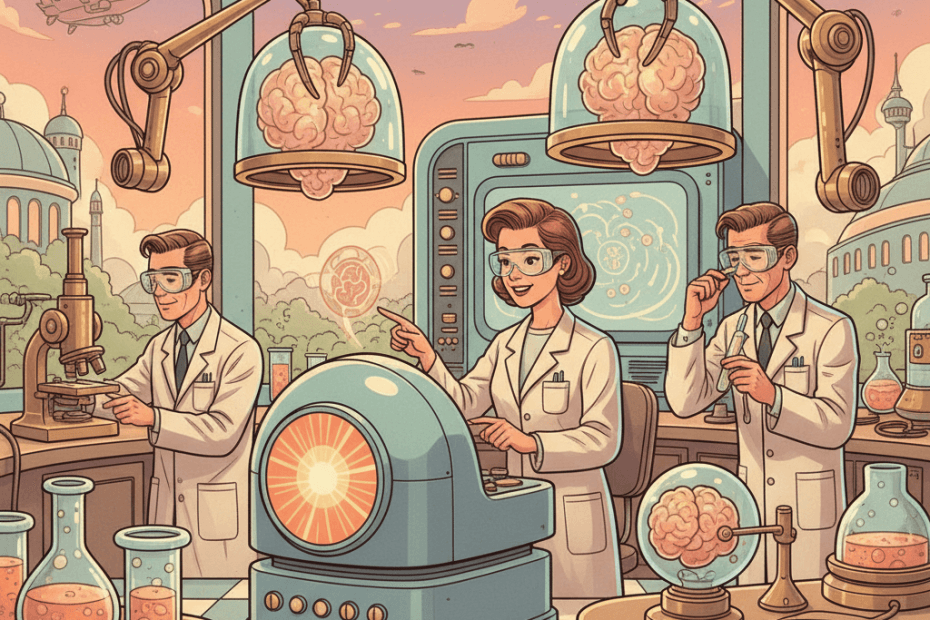
The work, at the UK Dementia Research Institute, uses patient data, voice recordings, eye scans and lab-grown brain cells to search for useful patterns. The hope is that algorithms can help researchers identify medicines that already exist, but may have hidden potential for conditions such as MND, Parkinson’s and dementia.
For ordinary readers, the important point is not that AI has suddenly found a cure. It has not. The useful lesson is subtler: AI can help scientists sort through complex data faster, test more possibilities, and decide which options are worth taking into proper clinical trials.
What the AI is doing
According to the BBC, researchers are collecting different types of information from patients, including voice recordings, iris or eye scans, and blood samples. Blood samples can be used to grow stem cells into neurones, which are then studied in the lab.
Existing drugs can be tested on those lab-grown cells with a mixture of robotics, standard lab equipment and computer analysis. Machine-learning systems are then trained to look for signs that a drug might move a disease pattern closer to a healthier one.
That is very different from asking a chatbot for a medical answer. The AI is not diagnosing someone at home or recommending a treatment. It is being used as a research tool to help scientists spot possible signals in large and messy datasets.
Why existing drugs matter
One reason this approach is interesting is that researchers are looking at drugs that have already been developed for other purposes. The BBC reports that around 1,500 approved drugs could potentially be examined in this way.
Repurposing an existing medicine can sometimes be quicker than starting from scratch because some safety, manufacturing and regulatory information already exists. That does not mean the medicine automatically works for a new condition. It still has to be tested properly, and the evidence has to show that the benefits outweigh the risks for the new use.
This is where AI may help with speed. It can narrow the field so scientists are not testing everything blindly. But narrowing the field is not the same as proving a treatment works.
Why this matters for MND and similar conditions
Motor neurone disease is a degenerative neurological condition that affects movement and does not currently have a cure. The BBC’s report follows Steven Barrett OBE, who has lived with MND for a decade and is taking part in research linked to the UK Dementia Research Institute.
The human stakes are obvious. For people living with MND and other neurological conditions, a faster route to useful treatments would matter enormously. But serious research also has to move carefully because false hope can be damaging.
The MND-SMART trial is one example of a more modern trial design. Its own website describes it as an innovative UK clinical trial testing potential treatments for motor neurone disease. The BBC reports that it can test several drugs at the same time, rather than following the older pattern of testing only one treatment against placebo.
The practical AI lesson
ManyHands has written before about why people should be careful before trusting AI health tools. This story is a useful companion point. AI in medical research can be valuable, but that does not make casual AI medical advice reliable.
There is a big difference between a research team using AI alongside lab tests, clinical data, ethics approval and trials, and a consumer chatbot giving a confident answer about symptoms or medication. One is part of a controlled scientific process. The other may be a useful way to prepare questions, but it should not replace professional medical advice.
That distinction matters because “AI in healthcare” is too broad a phrase. It can mean drug discovery, hospital admin, image analysis, appointment triage, symptom checkers, medical note-taking, or consumer wellness apps. Each use has different risks and different standards of evidence.
Why caution still matters
The BBC report also notes that wider neurological research has seen setbacks. Some Alzheimer’s drugs that were once described as breakthroughs have later faced questions about whether their effect is meaningful enough for patients.
That is not a reason to dismiss the new work. It is a reminder that biology is complicated, especially in the brain. A promising lab signal has to survive many more tests before it becomes something doctors can use with confidence.
AI may make parts of that process faster and more targeted. It may help researchers ask better questions and avoid wasting time on weak leads. But patients still need evidence from properly run trials, not just an algorithm’s suggestion.
What to watch next
The most useful developments to watch are not splashy claims about AI “solving” disease. They are quieter signs: more candidates moving into trials, clearer evidence about which patients may benefit, faster screening of existing medicines, and better ways of measuring whether a treatment is really changing the course of a condition.
For the public, this is one of the more grounded ways to think about AI. It is not a magic doctor in a box. It is a pattern-finding tool that can help experts work through problems too large and complex to inspect by hand.
That may be less dramatic than the usual AI headlines. In medical research, less drama is probably a good thing.
Sources: BBC News, UK Dementia Research Institute, and MND-SMART.