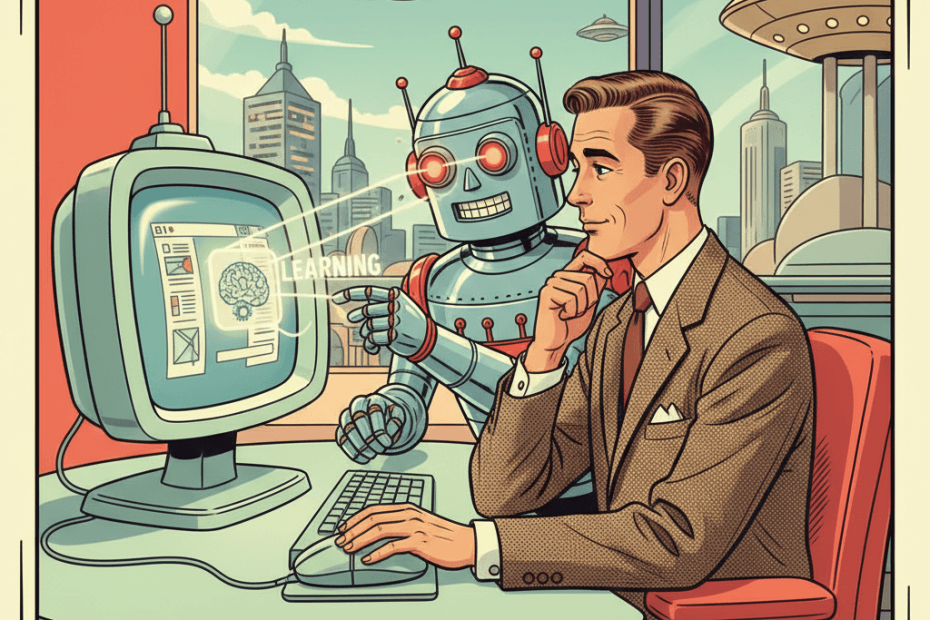
Meta says it will start capturing employees’ mouse movements, clicks and keystrokes on some work systems so the company can train AI agents that behave more like a person using a computer. The company told the BBC and other outlets that the aim is to help its models learn ordinary actions such as clicking buttons, moving through menus and navigating work apps. For most readers in the UK, this is not really a story about one Silicon Valley employer’s internal tools. It is a useful warning about where workplace AI may be heading next.
When people hear “AI at work”, they often think about chatbots drafting emails or summarising meetings. This is a step further. Instead of only asking workers to use AI tools, a company is turning the way staff already use their computers into training material for future AI systems. That matters because it shifts the question from “Should I use this assistant?” to “Is my normal working day becoming data for an assistant someone else will control?”
What Meta says it is doing
According to the BBC, Reuters and The Verge, the new internal tool is called the Model Capability Initiative, or MCI. It will run on Meta computers and in some work-related apps and websites, logging things such as keystrokes, clicks, mouse movements and occasional screenshots. Meta says the goal is to gather real examples of how people complete computer tasks so its AI agents can learn to do more of that work themselves. The company also says the data is not being used for performance reviews and that safeguards are meant to protect sensitive content.
Even with those caveats, it is easy to see why workers inside the company have reportedly reacted badly. The Verge said some employees described feeling uncomfortable and said there was no opt-out on a company laptop. The basic worry is not hard to understand. If your employer is gathering detailed traces of how you actually get your work done, the value is not only in helping a bot click the right button. It is also in capturing bits of judgement, routine and workflow that used to live mainly in people.
Why ordinary UK readers should care
You do not need to work at Meta for this to matter. Plenty of employers are now experimenting with AI for admin, customer service, document handling, scheduling and internal support. Once companies decide that future AI systems should copy what competent workers do on screen, it becomes tempting to collect more behavioural data: how people move through a CRM, how they update a spreadsheet, how they process invoices, how they handle a booking problem, or which steps they take before sending a sensitive message.
That does not mean every workplace is about to install keystroke logging software for AI training. But it does show the direction of travel. We recently wrote about what UK workers should ask when companies blame AI for job cuts, and about what to check before giving AI tools broad access. This Meta story sits squarely in that same area: convenience and automation on one side, monitoring and loss of control on the other.
The practical risks are not just about privacy
Privacy is the obvious issue, because detailed computer activity can reveal much more than a worker might expect. It can show habits, pace, mistakes, workarounds, and patterns of decision-making. Even if a company says it is filtering sensitive material, many employees will reasonably wonder how well that works in practice and where the data might end up later.
But there is a second issue too: bargaining power. Once a company has enough data to model how staff handle recurring tasks, more of that work can be turned into a managed system. Sometimes that may be genuinely useful. Repetitive admin is a fair target for automation. Good documentation can also make teams less fragile and reduce the pressure on one person to remember everything. The risk comes when the line between “helpful automation” and “capturing the know-how behind your role” starts to disappear.
That is especially relevant in office jobs where value often comes from small judgement calls rather than big dramatic expertise. The way a person spots an odd invoice, softens a difficult email, notices when a customer is confused, or checks whether a booking detail looks wrong can be hard to write down. Companies building AI agents increasingly want exactly that kind of applied routine knowledge. Once it is formalised as training data, the balance of power can quietly move away from the worker.
What to watch if this logic reaches more workplaces
If a UK employer starts talking about AI systems learning from real employee workflows, the sensible questions are fairly basic. What exactly is being captured? Is it only button clicks and navigation patterns, or also screenshots, messages and document contents? Can staff opt out? Is the data used only for one internal tool, or for broader model training? Who checks that personal, confidential or commercially sensitive information is not being swept in? And if the AI gets something wrong, who carries the responsibility?
The useful takeaway here is not to panic or assume every AI workflow is a hidden replacement plan. It is to notice that the next phase of workplace AI may involve much more observation, not just more assistance. As firms chase agents that can act on their own, everyday human computer use starts to look like valuable raw material. For UK readers, that is the part worth watching closely. When a company says it wants AI to work more like a person, it may first need to study people far more closely than they expected.
Sources:
BBC News, Meta to track workers’ clicks and keystrokes to train AI
The Verge, Now Meta will track what employees do on their computers to train its AI agents
TechCrunch, Meta will record employees’ keystrokes and use it to train its AI models