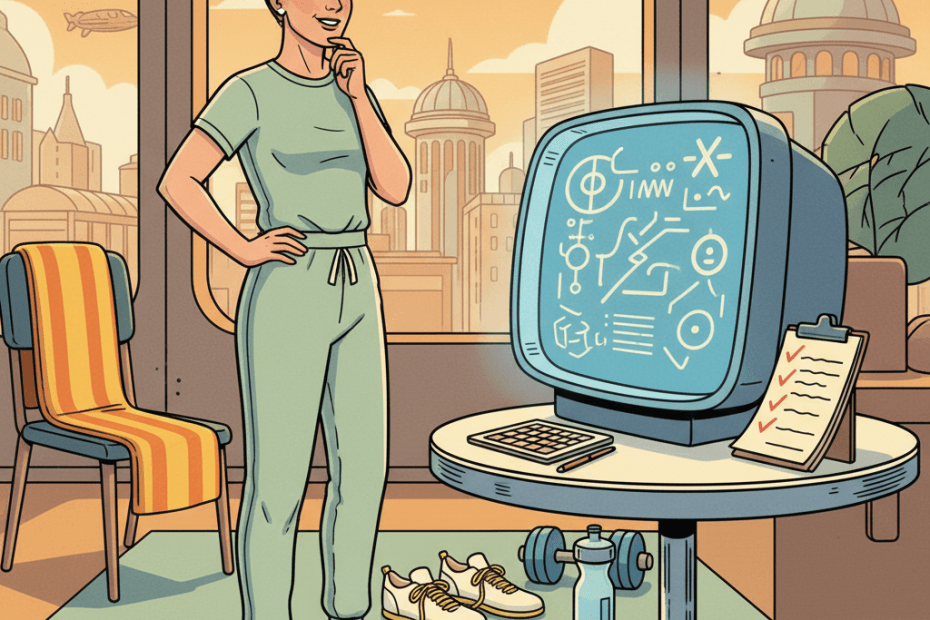
AI is no longer only being used for office emails, homework and shopping research. According to a new Guardian reader callout, people are also asking chatbots and fitness apps to build workout plans, suggest swimming routines, track progress, adjust exercises around injuries and offer diet prompts. The experiences are mixed: some people say AI helped them stick to a routine for the first time in years, while others are wary of trusting a system that can sound confident even when it is wrong.
That makes this a useful everyday AI story for UK readers. A chatbot can make getting started feel less intimidating. It can turn vague goals — “I want to get fitter”, “I only have 30 minutes”, “I have a knee problem”, “I want to swim more” — into a rough plan. But exercise is also physical. Bad advice can hurt you in a way that a bad email summary usually cannot.
The sensible position is not “never use AI for fitness”. It is: use it like a planning assistant, not like a qualified personal trainer, physiotherapist or doctor.
Why AI fitness plans feel useful
One reason people like AI for exercise is that it removes the blank page. If you have not trained for years, a gym can feel full of hidden rules. If you want to swim, lift weights or restart running, the first barrier is often not motivation but uncertainty: what should I do first, how often, and how do I avoid overdoing it?
A chatbot is good at turning constraints into structure. You can say you have no gym membership, only two evenings free, a set of dumbbells, a preference for swimming, or a history of giving up after two weeks. It can produce a weekly routine, a shopping list, a warm-up, a progress tracker and reminders to rest. That does not make the plan medically sound, but it can make the next step clearer.
For people who already know something about training, AI can also be a useful sounding board. It can compare options, rewrite a plan for a busy week, suggest questions to ask a coach, or help turn notes from a fitness app into a more readable summary.
The big risk is confident nonsense
The problem is that a chatbot does not see your form, your pain, your history or your limits. It may not know whether you are rushing a movement, twisting awkwardly, lifting too much, recovering from an injury, or ignoring a warning sign. The Guardian article quotes Columbia University movement science professor Dr Carol Garber warning that AI can get things wrong and that mistakes in exercise guidance can lead to serious injuries.
That is why an AI plan should be treated as a draft. If it suggests big jumps in distance, heavy lifts you have never done, exercises that aggravate pain, restrictive diets, or anything that sounds extreme, slow down. Cross-check the basics with trusted sources such as NHS exercise guidance, or ask a qualified human professional where possible.
This is especially important if you have a medical condition, are recovering from injury, are pregnant, have not exercised for a long time, or are taking medication that affects your energy, heart rate or balance. A chatbot may include a disclaimer, but the disclaimer will not protect your knee, back or heart.
Privacy matters too
Fitness prompts can become personal very quickly. To get a tailored plan, people often share their age, weight, health conditions, injuries, medication, food habits, sleep, body image worries or wearable data. That information may be more sensitive than the user realises at the moment they type it.
Before using a chatbot as a fitness helper, check what you are comfortable sharing. You may not need to give your real name, exact weight, address, employer or full medical history. You can often describe constraints more generally: “I have a previous knee injury” may be enough for a draft plan. If you are using a specific fitness app, look at its privacy settings, data export options and whether it uses your information to train or improve AI systems.
ManyHands has covered this wider point before: AI tools can be useful, but permissions matter, whether you are using AI health tools or giving an assistant access to personal information. The more intimate the task, the more carefully you should think about the data trail.
A safer way to use AI as a fitness helper
If you want to experiment, start with a modest request. Ask for a beginner-friendly plan, tell the tool what equipment you actually have, and ask it to explain why each activity is included. Then ask it to identify risks, easier alternatives and signs that you should stop. A good prompt is not just “write me a six-week programme”. It is “write me a cautious six-week beginner plan, avoid medical claims, include rest days, and list what I should check with a professional”.
Keep the first week easy enough that you can complete it comfortably. Progress should feel boring at the start. If the AI gives you a plan that looks impressive but unrealistic, ask it to halve the volume. If it suggests diet changes, treat them as general ideas, not personalised nutrition advice. Be particularly careful with rapid weight-loss promises, supplement recommendations or anything that sounds like treatment.
It also helps to combine AI with human feedback. A swimming coach, gym instructor, physio, GP or experienced class leader can spot problems an app cannot. Even a short check-in can make an AI-generated plan safer and more realistic.
The practical takeaway
AI can be a useful nudge when the hardest part is getting started. It can organise your thoughts, build a routine, remind you to rest and help you adapt a plan around real life. But it is not a body-aware coach. It cannot feel your pain, watch your technique or take responsibility for your health.
So use AI for structure, questions and motivation. Use trusted health sources and qualified humans for safety, injury worries and anything medical. The best fitness plan is not the cleverest one a chatbot can generate. It is the one you can follow safely, understand clearly and adjust when your real body tells you something the computer missed.
Sources: The Guardian, NHS exercise guidance, KPMG UK attitudes to AI research.